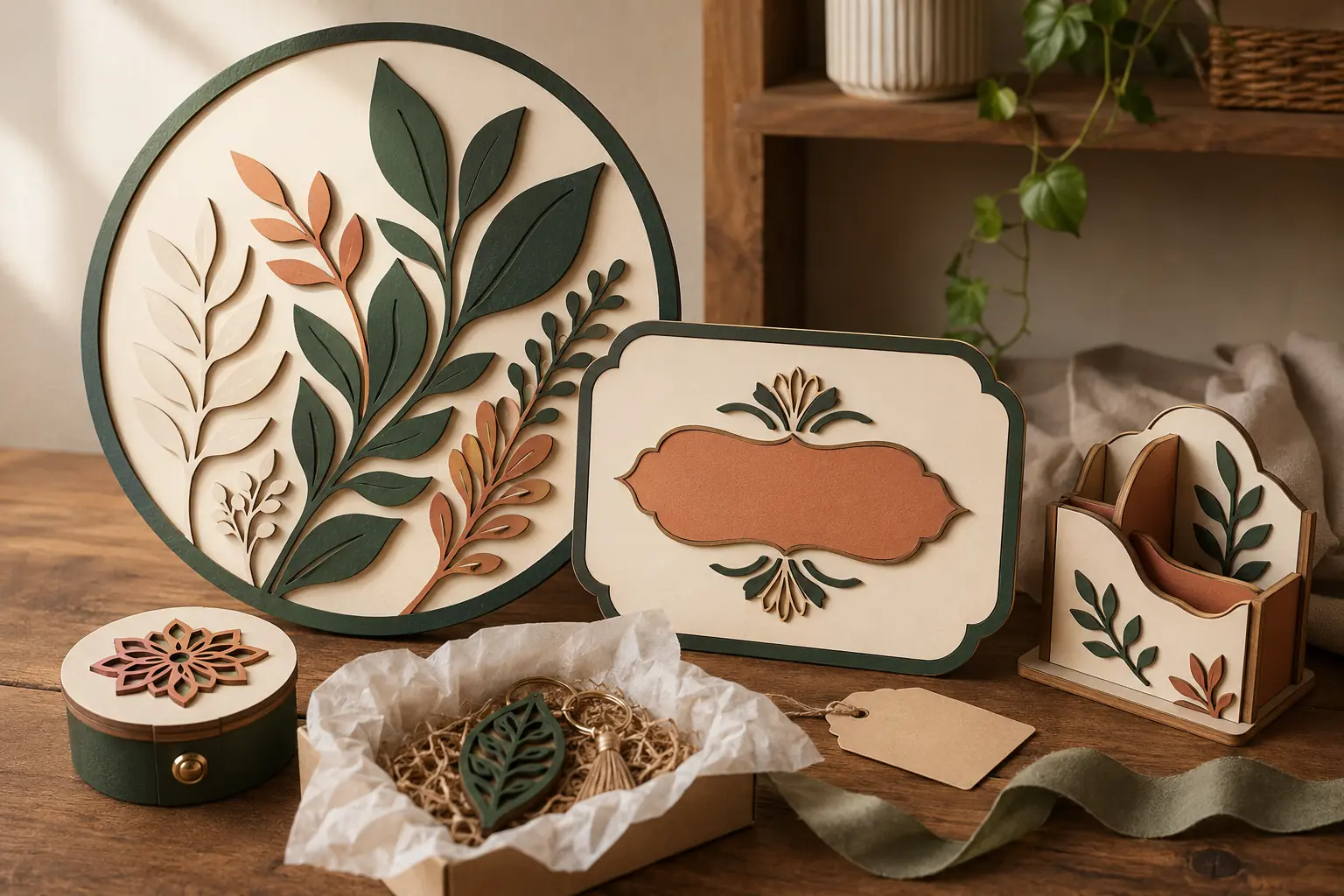
Some laser cut files are wonderful projects and terrible products. They photograph beautifully, collect enthusiastic comments and quietly consume so much material and finishing time that every sale feels like a small punishment. A sellable design has to do more than look good. It needs to make sense for a particular buyer, survive your workflow and leave enough room for profit after the pretty photo has done its job.
That doesn't mean choosing only simple files. It means choosing complexity the customer can see and value—not complexity that stays hidden in your workshop.
Start with a buyer, not a broad trend
“Home decor” is a category. “A housewarming gift for a dog-loving couple” is a buying situation. The second gives you far more useful clues about the design, price, personalization and photographs you'll need.
Before downloading a file, finish this sentence: This product is for someone who wants ___ because ___. If the answer could describe almost anything, the product will be difficult to position. A narrow use case does not necessarily mean a tiny market; it gives the right customer a reason to stop scrolling.
Look for evidence of the occasion or problem—not only the exact design. Search terms, marketplace listings, reviews and social saves can show that buyers want personalized nursery pieces, compact organizers or memorable housewarming gifts even when your exact product is new.
Judge the production reality
A design is easier to sell repeatedly when it is predictable. Count separate pieces and layers. Note how much masking, sanding, painting, gluing, alignment and drying it may require. Then ask what happens on order number twelve, not only on the exciting first sample.
Files with clean shapes, sensible layer order and clear assembly guidance reduce variation between finished products. Personalization can add value, but the editable area should be easy to change without rebuilding the entire design each time.
- The design fits a standard material size with reasonable waste.
- Fragile details are limited and replacement pieces are easy to reproduce.
- Assembly steps can be repeated in the same order.
- Personalization does not create a completely new layout for every customer.
- The finished result is consistent enough to photograph and describe accurately.
 Signs
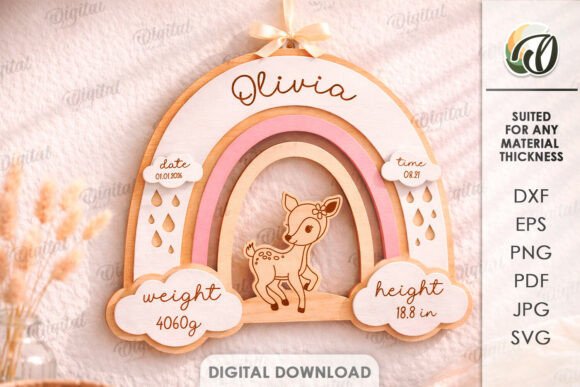
SignsCustomizable Baby Name Sign with Birth Stats Laser Cut File
View product →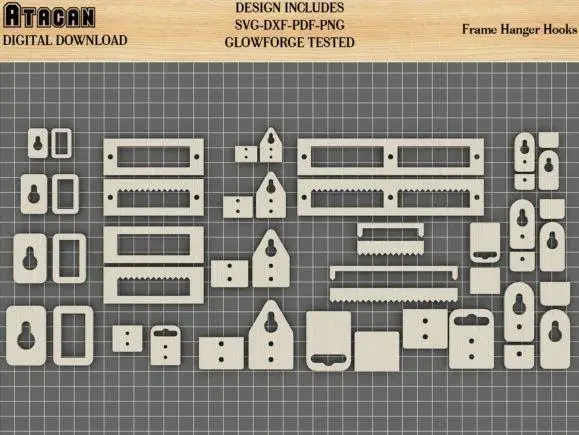 Business Displays
Commercial Photo Frame Hanger Hooks Laser Cut SVG
View product →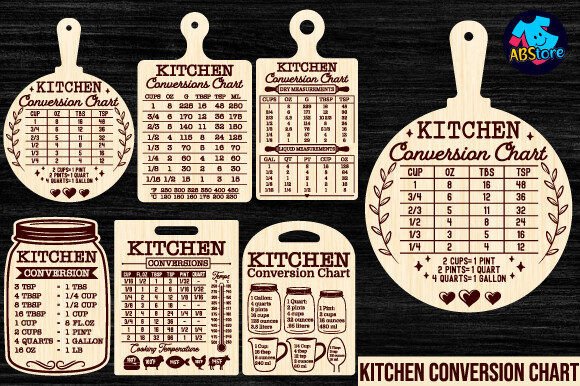 Signs
SignsKitchen Conversions Chart Laser Cut Files
View product →Look for value the customer can see
Customers cannot see your machine time. They see size, depth, usefulness, finish, personalization and emotional meaning. A five-layer botanical panel may support a higher price because its depth is visible. A small key holder can feel valuable because it solves a daily problem. A personalized birth-stat sign carries a story that a generic shape does not.
This is where the best commercial files are clever: they create a strong visual or useful result without adding the same amount of hidden labor. One contrasting layer, a name option or a practical hook can raise perceived value more efficiently than dozens of tiny cutouts.
Plan for shipping before you fall in love
The product is not finished when it leaves the worktable. Large panels, delicate bridges and protruding parts can require costly packaging or create disappointing breakage. Compare the finished dimensions with common mailer sizes and think about whether the piece can ship flat, nest, or be assembled by the customer with genuinely clear instructions.
A slightly smaller design that fits reliable packaging can be more profitable than a dramatic piece that pushes every parcel into a higher shipping tier. If you sell locally, size may be less restrictive—but storage and transport still count.
Verify the commercial license
Never assume that purchasing a file gives permission to sell anything made from it. Confirm that the license allows commercial sale of finished physical products, and check limits on production quantity, personalization, outsourcing and print-on-demand. Digital redistribution of the source file is usually prohibited.
Save the purchase receipt and the license terms that applied at the time. A simple folder for each commercial design is far easier to manage than reconstructing the permission trail later.
A final product check
Before committing to a file, make sure you can answer yes to the essentials below. Any uncertain point belongs in your first prototype test.
- I can name a clear buyer, occasion or problem.
- I can produce the same quality efficiently more than once.
- The finished product looks useful, personal or meaningfully detailed.
- Packaging, storage and shipping are practical for the expected price.
- The commercial license clearly covers the intended use.
If these points hold up, the file deserves a prototype and a real cost calculation. That is a much better place to begin than “people seemed to like the picture.”